
Immune & Barrier Defense

Body & Peptide Science · System 06

Immune & Barrier Defense

How innate immunity guards the body’s surfaces, and what the peptide literature actually documents about LL-37, KPV, BPC-157, and GHK-Cu.
4 compounds studied10 primary sourcesResearch use only
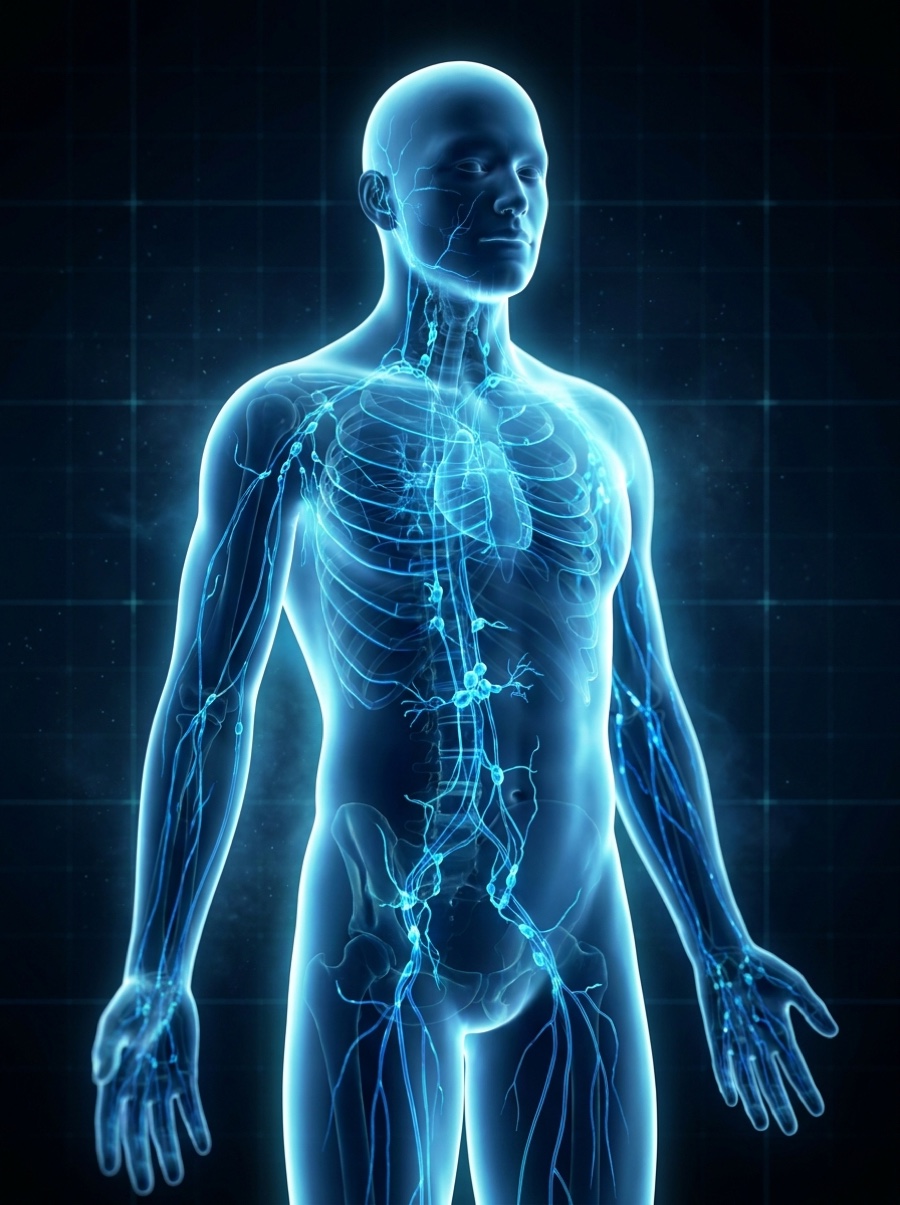
Anatomical bio-scan of the Immune & Barrier Defense
01

The system at a glance

Your skin, gut, and airway linings are not just walls. They are chemically active surfaces that sense microbes, release their own antibiotics, and orchestrate the repair that follows. This first layer of protection is the innate immune system, and a recurring theme in its biology is the small molecule known as the host-defense (antimicrobial) peptide. This page explains how that system works and, for four peptides studied in this context, exactly what the published research examined, in which model or species, and where the evidence stops. It is educational and research-use-only: it describes documented mechanisms, not uses, protocols, or outcomes for people.

02

How it signals

The innate immune system reacts within minutes to hours, before antibodies exist. Epithelial cells and neutrophils release cationic peptides that punch holes in bacterial membranes; the same peptides double as ‘alarmins’ that recruit immune cells, tune inflammation up or down, and later help close the wound they were fighting in. Two ideas run through everything below. First, defense and repair are the same program viewed at different times: the peptide that kills a microbe on day one often promotes re-epithelialization and new blood vessels by day three. Second, resolution matters as much as attack: inflammation that never switches off damages the barrier it was meant to protect. Read each compound as a probe into one part of this loop, tested mostly in cells and animals.

03

Research peptides studied in this system

Each card summarizes the documented mechanism, what was actually studied and in what model, and how strong the evidence is. These are descriptions of laboratory research — not recommendations, and not evidence of benefit in humans. According to research indexed in PubMed:

LL-37human cathelicidin (hCAP-18 C-terminal fragment)Moderate – well-characterized endogenous human peptide; therapeutic use still preclinical
Documented mechanism
LL-37 is the active fragment of the only human cathelicidin. As a small amphipathic helix it inserts into and permeabilizes bacterial membranes (a pore-forming, direct antimicrobial action), and it is also broadly immunomodulatory: it binds and neutralizes bacterial endotoxin (LPS), acts as an ‘alarmin’ that recruits immune cells, and can push inflammation either up or down depending on context. It also participates in wound closure and angiogenesis. Notably it is pleiotropic and can be cytotoxic to host cells at higher concentrations. 123
What was actually studied
Characterized in human cells and tissues and in laboratory assays. Its antibacterial and membrane-permeabilizing behavior is studied biochemically and in vitro; its role in skin wound re-epithelialization was shown in human skin samples and organ-cultured (ex vivo) human skin, where blocking LL-37 impaired healing and chronic ulcers showed reduced levels. Broader anti-/pro-inflammatory and antiviral mechanisms are summarized in current reviews. This is endogenous human biology; it is not the same as evidence that administering the peptide treats a condition.
Evidence tier
LL-37 is genuinely part of normal human host defense, which is why its mechanisms are relatively well mapped. But the same molecule is context-dependent and can harm host cells at high local concentrations (e.g., very high levels are found in psoriatic lesions). Documented mechanism does not equal a demonstrated, safe therapeutic effect.
KPVLys-Pro-Val; C-terminal tripeptide of alpha-MSH (alpha-MSH 11-13)Low – mechanism supported mainly in cell culture and rodent colitis models
Documented mechanism
KPV is the three-amino-acid tail of the melanocortin alpha-MSH and carries much of its anti-inflammatory activity. In intestinal epithelial and immune cells it dampens pro-inflammatory signaling (reduced NF-kB and MAP-kinase activation and lower pro-inflammatory cytokine output). A key documented route is uptake through the di/tripeptide transporter PepT1, which is expressed in the small intestine and induced in inflamed colon, letting KPV act directly inside epithelial and immune cells; some of its effect appears independent of the melanocortin-1 receptor. 456
What was actually studied
Human intestinal epithelial cell lines and T cells in vitro, and mouse models of colitis (DSS- and TNBS-induced, and CD45RB transfer colitis), including work with targeted oral nanoparticle delivery that reported reduced mucosal damage and lower TNF-alpha. Evidence is preclinical: cultured human cells and rodents, not human clinical trials.
Evidence tier
The mechanistic story (PepT1 transport, NF-kB suppression) is coherent and reproduced across labs, but it stops at animals and cell culture. There is no cited human efficacy trial here, and delivery/stability are open questions that the nanoparticle work was specifically designed to address.
BPC-157stable gastric pentadecapeptide (15-amino-acid sequence from a gastric protein)Low – extensive rodent work, largely from one research group; independent human evidence lacking
Documented mechanism
BPC-157 is described in the literature as a ‘cytoprotection’ mediator. The proposed mechanism centers on rapid recruitment and branching of small blood vessels toward a tissue defect, alongside interaction with the nitric oxide (NO) system, modulation of growth-factor and inflammatory gene expression (e.g., VEGF, COX-2, NOS isoforms, NF-kB pathway components), and free-radical scavenging. In the gut-barrier context this is framed as accelerated healing of mucosal and through-wall defects. 78
What was actually studied
Overwhelmingly rat and mouse studies: gastrointestinal ulcers and fistulas (including a duodenocolic fistula model), NSAID-induced injury, anastomotic and wound healing, and vascular effects. Reviews mention early inflammatory-bowel-disease clinical safety work, but the robust, reproducible data are preclinical and a large share originates from a single group. Independent human efficacy evidence is not established.
Evidence tier
The animal literature is extensive and consistent, but concentration in one research program, limited independent replication, and the absence of strong human trials are real limits. Read BPC-157 as a well-studied preclinical hypothesis about vascular-driven barrier repair, not a proven treatment.
GHK-Cuglycyl-L-histidyl-L-lysine copper(II) complex; GHK-CuModerate – endogenous human peptide with human skin-remodeling data; immune/anti-inflammatory role mostly preclinical
Documented mechanism
GHK is a naturally occurring human tripeptide whose serum level declines with age; it binds copper avidly to form GHK-Cu. The complex is described as a tissue-remodeling and anti-inflammatory signal: it attracts repair cells (macrophages, mast cells, capillary cells), suppresses oxidative and inflammatory mediators (free radicals, TGF-beta1, TNF-alpha), and up-regulates synthesis of collagen, elastin, and growth factors (VEGF, FGF-2, NGF), supporting angiogenesis and re-epithelialization. 910
What was actually studied
A large mechanistic and review literature plus controlled human skin studies (skin tightening, elasticity, reduced fine lines and photodamage) that anchor its wound/skin-remodeling claims. Its specifically immune/anti-inflammatory actions are shown mainly in cell and animal work, e.g., a mouse model of bleomycin-induced pulmonary fibrosis where GHK-Cu reduced inflammatory cytokines and oxidative stress via Nrf2, NF-kB, and TGF-beta1/Smad signaling.
Evidence tier
Because GHK is endogenous and has some human cosmetic/skin evidence, its tissue-remodeling mechanism is better grounded than most peptides here. But the immune-defense and anti-fibrotic framing rests on preclinical models, and copper handling matters biologically, so mechanism should not be read as a validated systemic immune therapy. Note: the human skin-remodeling evidence traces largely to a single, commercially affiliated review (Pickart), so it should not be read as independently replicated.
04

What we don’t know — and the risks

Honest limits matter as much as the mechanisms. For this system specifically:

  • Research-use-only: everything here describes documented mechanisms and what was studied, not instructions, doses, timing, or any use in people. Nothing on this page is medical advice.
  • Model gap: most findings come from cell culture and rodents. Effects in a dish or a mouse frequently fail to translate to humans, and species and delivery differences are large.
  • Endogenous does not mean harmless: LL-37 and GHK-Cu are natural human molecules, yet LL-37 can be cytotoxic to host cells at high local concentrations and is context-dependent (pro- or anti-inflammatory).
  • Evidence concentration and independence: some of the strongest-looking bodies of work (notably BPC-157) come largely from single research groups and lack broad independent replication or robust human trials.
  • No human efficacy claims are made here for KPV or BPC-157; the cited human-relevant data are mechanistic or safety-oriented, not proof of clinical benefit.
  • Purity, stability, and identity are unaddressed by this literature and are separate scientific questions from the biology described.
05

Responsible understanding

◆ This is education, not medical advice

This page is educational and describes what has been studied in laboratory and clinical research. It is not medical advice, and these materials are for research use only — not for human or veterinary use. Timing, administration, and whether anything is used at all are clinical decisions that belong with a licensed physician overseeing your care; we take no position on them. Science and regulation evolve; verify anything important against the primary sources below.

06

Sources

Based on articles retrieved from PubMed. Follow each link to the original paper.

  1. Svensson D, Nilsson BO Human antimicrobial/host defense peptide LL-37 may prevent the spread of a local infection through multiple mechanisms: an update Inflammation Research. 2025;Inflamm Res. 2025;74(1):36. DOI
  2. Xhindoli D, Pacor S, Benincasa M, Scocchi M, Gennaro R, Tossi A The human cathelicidin LL-37 – A pore-forming antibacterial peptide and host-cell modulator Biochimica et Biophysica Acta. 2015;Biochim Biophys Acta. 2015;1858(3):546-66. DOI
  3. Heilborn JD, Nilsson MF, Kratz G, Weber G, Sorensen O, Borregaard N, Stahle-Backdahl M The cathelicidin anti-microbial peptide LL-37 is involved in re-epithelialization of human skin wounds and is lacking in chronic ulcer epithelium Journal of Investigative Dermatology. 2003;J Invest Dermatol. 2003;120(3):379-89. DOI
  4. Dalmasso G, Charrier-Hisamuddin L, Nguyen HT, Yan Y, Sitaraman S, Merlin D PepT1-mediated tripeptide KPV uptake reduces intestinal inflammation Gastroenterology. 2007;Gastroenterology. 2008;134(1):166-78. DOI
  5. Xiao B, Xu Z, Viennois E, Zhang Y, Zhang Z, Zhang M, Han MK, Kang Y, Merlin D Orally Targeted Delivery of Tripeptide KPV via Hyaluronic Acid-Functionalized Nanoparticles Efficiently Alleviates Ulcerative Colitis Molecular Therapy. 2017;Mol Ther. 2017;25(7):1628-40. DOI
  6. Kannengiesser K, Maaser C, Heidemann J, Luegering A, Ross M, Brzoska T, Bohm M, Luger TA, Domschke W, Kucharzik T Melanocortin-derived tripeptide KPV has anti-inflammatory potential in murine models of inflammatory bowel disease Inflammatory Bowel Diseases. 2008;Inflamm Bowel Dis. 2008;14(3):324-31. DOI
  7. Vukusic D, Zenko Sever A, Sever M, Drmic D, Milavic M, Sikiric S, et al. Duodenocolic fistula healing by pentadecapeptide BPC 157 in rats. A cytoprotection viewpoint Journal of Physiology and Pharmacology. 2024;J Physiol Pharmacol. 2024;75(1). DOI
  8. Sikiric P, Seiwerth S, Rucman R, Turkovic B, Stancic Rokotov D, Brcic L, et al. Stable gastric pentadecapeptide BPC 157: novel therapy in gastrointestinal tract Current Pharmaceutical Design. 2011;Curr Pharm Des. 2011;17(16):1612-32. DOI
  9. Pickart L The human tri-peptide GHK and tissue remodeling Journal of Biomaterials Science, Polymer Edition. 2008;J Biomater Sci Polym Ed. 2008;19(8):969-88. DOI
  10. Ma WH, Li M, Ma HF, Li W, Liu L, Yin Y, Zhou XM, Hou G Protective effects of GHK-Cu in bleomycin-induced pulmonary fibrosis via anti-oxidative stress and anti-inflammation pathways Life Sciences. 2019;Life Sci. 2019;241:117139. DOI
Body & Peptide Science · Immune & Barrier Defense · Draft for review
Research-use-only educational content. Nothing here is medical, dosing, timing, or treatment advice.
For research use only — not for human consumption, and not for diagnosing, treating, curing, or preventing any disease or condition, or making any medical claim. BioBoost Research is an educational resource. Science and regulation are evolving, and the information here may be incomplete, become outdated, or contain errors. Nothing here is medical, legal, or dosing advice — always verify against primary sources and consult a qualified professional. All information reflects facts as best known to BioBoost Research. Full disclaimer →

On clinical data and dosing: Any clinical trials, data, or dosing figures referenced anywhere on this site were conducted in controlled settings under qualified professional and physician oversight, and are shown for informational and educational purposes only — never as guidance. BioBoost Research makes no claim that the same outcome or safety profile would apply to any compound, person, or context. Research and educational use only · 21+.

Read the full Disclaimer →